
Firodia talked about his plans for the EV-components business, and the components business at large for the group

The 17 rare earth elements that are at the centre of the current crisis are critical components of everyday products -- from cars to jet engines to electronics like smartphones and flat-screen TVs.

Maruti Suzuki and Hyundai Motor India on Monday reported a dip in passenger vehicle dispatches to dealers in the domestic market last month as the companies tried to adjust vehicle inventory amid slowing demand. Maruti Suzuki India said it "calibrated supplies" to the dealers, aligning with the industry's retail sales projections amid India-Pakistan conflict and a dip in sales of entry-level cars.

GST Reform 2.0, which trims tax slabs from four to two, signals a push for demand-led growth, and together with recent income tax cuts, sets the stage for sustained economic growth, experts said. The Goods and Services Tax (GST) Council on September 3 approved an overhaul of the indirect tax regime by taxing essentials at 5 per cent and other goods at 18 per cent. A new 40 per cent tax will be applicable on luxury and sin items.

Bajaj Auto and TVS Motor are the largest exporters in the listed space with export revenues of Rs 12,000 crore and Rs 5,000 crore.

Tamil Nadu -- often dubbed as India's own Detroit due to its thriving automobile manufacturing ecosystem -- is in no mood to miss the EV bus either. Recent developments attest to it. Vietnamese electric vehicle (EV) maker VinFast has promised a $2 billion plant in the southern state. And as promised earlier, the work on Tata Motors-JLR plant will kick off next week, on September 28, after the foundation stone laying ceremony.

Hero MotoCorp on Tuesday posted 24 per cent increase in consolidated profit after tax at Rs 1,169 crore for the fourth quarter ended March 31, 2025 riding on higher margins backed by better product mix, parts revenue and cost effectiveness. The company had reported a consolidated profit after tax (PAT) of Rs 943 crore in January-March FY24.

Amid better semiconductor chip supplies, the Indian automotive industry posted an 8 percent growth in production of vehicles across categories for the month of May, with three-wheelers (20 per cent) and passenger vehicles (16 per cent) leading the pack. Exports, however, dipped 21 per cent at an industry level. The industry also recorded its highest-ever May wholesales of domestic passenger vehicles (334,802 units), riding on high demand for sport utility vehicles (SUVs) and better supplies of semiconductor chips.

'The favourable rupee-dollar exchange rate, there are opportunities we can tap.'

'Price competition is fierce, with many companies selling at zero margin.' 'This pricing pressure is challenging smaller companies and will likely drive some out of the market over time.'

Bajaj Auto Ltd has clocked a 3.1 per cent growth in two wheeler sales for the fiscal ended March 31 at 12,88,259 units compared to 12,49,104 units in 2002-03.
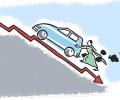
The only silver lining in March's performance -- which otherwise dragged down the financial year's momentum -- was a 6 per cent year-on-year (Y-o-Y) growth compared to March of the previous year. This is largely due to incentives, festival-driven gains, and new launches.
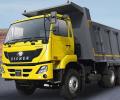
The stock of two wheeler maker Eicher Motors was the highest gainer among BSE 100 stocks, rising 6.6 per cent in trade on Friday. The gains came on the back of better than expected performance in the March quarter of the 2022-23 financial year (Q4FY23) and earnings upgrades by brokerages. Standalone revenues (Royal Enfield) were up 19.9 per cent year-on-year (YoY), led by an 18 per cent growth in volumes and a marginal uptick in realisations.

Reflecting the woes of the Indian automobile industry, the country's car exports remained flat at 550,466 units in 2013-14, during which domestic sales fell for the second consecutive year.

For the first time, the event will take place across three locations in Delhi: Bharat Mandapam at Pragati Maidan, Yashobhoomi Convention Centre at Dwarka, and India Expo Mart at Greater Noida.

Amid challenging market environment, Maruti Suzuki India and Mahindra & Mahindra reported an increase in vehicle dispatches to dealers last month while Tata Motors and Hyundai saw a year-on-year drop in sales.

Vietnam was wonderful and the people warm and hospitable, Radhika Mittal discovered over a 11-day stay.

Leading passenger vehicle maker Maruti Suzuki on Saturday reported marginal growth while Hyundai and Tata Motors posted a decline in their sales in February as a slowdown in the market continued with demand remaining muted. On the other hand, Mahindra & Mahindra and Toyota Kirloskar Motor posted double-digit growth riding on their SUV and MPV models.

The Softbank-backed company has set a price band of Rs 72 to Rs 76 per share for the maiden share sale and is expected to test the appetite for new-age loss-making companies.

However, the company has not provided a timeline for the launch of the small electric car.

Passenger vehicle sales are expected to experience muted growth in the current financial year.
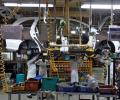
Auto majors Maruti Suzuki India and Hyundai reported muted sales performance in October as the companies curtailed dispatches to dealers in order to cut inventory build up.

Passenger vehicle wholesales in India touched a record high of 42,18,746 units in the financial year 2023-24, registering a year-on-year growth of 8.4 per cent on the back of robust demand for utility vehicles, industry body SIAM said on Friday. As per the latest data issued by the Society of Indian Automobile Manufacturers (SIAM), the overall passenger vehicle dispatches stood at 38,90,114 units in fiscal year 2022-23. Two-wheeler sales were up 13.3 per cent last fiscal at 1,79,74,365 units, as compared to 1,58,62,771 units in the financial year 2022-23.

Truck movements across the India-Bangladesh border are on the rise, with increasing rentals signalling a trade recovery between the two South Asian nations. Yet, geopolitical tension looms large, with Bangladesh now under an interim government for nearly two months.

'Invest only in stocks of those companies that deliver on earnings and there is earnings visibility too for the next few quarters.'

Finance Minister (FM) Nirmala Sitharaman has presented a forward-looking Budget, reinforcing the government's commitment to 'Reform, Perform, and Transform'.

'Every Indian should move to an EV, and the government should not buy any fossil fuel cars. The government should become the first driver of EV adoption.'

According to the figures released by the Society of Indian Automobile Manufacturers, total exports from the country stood at 23,39,333 units in last fiscal compared to 18,04,426 units in the year-ago period.
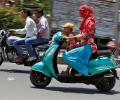
After lagging behind other segments in the automotive (auto) space over the past few years, two-wheelers are expected to reverse their volume underperformance. After witnessing a 36.3 per cent volume decline over the 2018-19 (FY19) through 2021-22 (FY22) periods, the sector staged a recovery in 2022-23 (FY23), with volumes rising 17 per cent. While volumes are still a quarter lower than the FY19 peak of 21 million units, a double-digit growth trajectory is expected to prolong.
A majority of HMIL's current export comprises the i10 model, which is exported to Asia, Latin America and Western Europe. In addition, the company has stated that 90 per cent of the i20 model (a premium hatchback) will be exported. The company will produce 150,000 units of the model annually.
Kinetic Motor is planning to export its recently launched Blaze range of motoscooters to Japan.

'There's a misconception that all Rs 1 lakh crore will be spent immediately, leading to higher consumption of FMCG goods, travel, and vehicle purchases.' 'While some of this money will go toward consumption, not all of it will.' 'The impact depends on where people deploy their savings.'

Passenger vehicle wholesales in India rose 29 per cent to 291,113 units in October aided by robust demand in the festive season, the Society of Indian Automobile Manufacturers (SIAM) said on Friday. Total passenger vehicle dispatches from companies to dealers were 226,353 units in October 2021. Total two-wheeler dispatches last month increased 2 per cent to 15,77,694 units as compared to October 2021.
Bajaj Auto reported steady results in Q1FY25, with revenue surging 16 per cent year-on-year (Y-o-Y), operating profit registering a growth of 24 per cent Y-o-Y, and margins swelling 20.2 per cent. The profitability was aided by 50 basis points (bps) on the accrual of PLI benefits. The domestic prospects for two-wheelers are healthy, though the response to the newly launched CNG motorcycle is a key monitorable.

'Wherever the government has provided incentives for the purchase of two-wheelers, three-wheelers, cars, buses, and trucks, it gets a push for most of these alternate fuels. '

Honda Motorcycle and Scooter India (HMSI), India's second-largest two-wheeler maker, on Wednesday revealed its electric vehicle (EV) roadmap, which includes setting up a dedicated EV factory, launching the first two EVs in 2023-24, and establishing 6,000 battery exchange points in the country. HMSI plans to establish a specialised unit for the manufacturing of electric vehicles (EVs), named 'Factory E', at its Narsapura plant located in Karnataka. Factory E will be created by converting an existing production line that currently manufactures internal combustion engine (ICE) vehicles, said Atsushi Ogata, HMSI managing director and chief executive officer.
Bajaj Auto's market capitalisation (market cap) hit Rs 2 trillion mark for the first time. The stock of the two and three-wheeler major rallied 6 per cent to hit a new high of Rs 7,420 on the BSE in Tuesday's (January 9) intraday trade after its board approved Rs 4,000 crore share buyback at Rs 10,000 per share. The stock ended the day at Rs 7,093.75, up 1.55 per cent and its market cap a shade above Rs 2 trillion.

India's largest two-wheeler maker by volume - Hero MotoCorp (Hero) - posted a better-than-expected operating performance in the January-March (fourth quarter, or Q4) quarter of 2022-23 (FY23). Riding on higher average selling prices which were up 5 per cent year-on-year (YoY) and volume growth of 7 per cent, the company registered a 12 per cent growth in revenue to Rs 8,306 crore. The company sold 127,000 units in the quarter, largely driven by domestic sales which were up 11.6 per cent, while exports saw a sharp fall of 57 per cent over the year-ago quarter.

TVS Motor Company met expectations in terms of revenue and posted a strong margin performance in Q1FY25. The key drivers were material cost savings and a better mix. The domestic demand outlook looks good with a rural rebound but geopolitical uncertainties in key export markets may dent overall growth.

The biggest bounce is in the realty sector, where the industry index jumped 80%. There's been a turnaround also in automobiles and ancillaries (up 45%). The pharma and health care indices have a welcome return of roughly 35%.
